16 October 2026
Grain's dual role in the game
So far, archaeologists have not found any kind of coins or currency in the Indus Valley Civilization. Some gold and silver has been found, but it doesn't seem like they were a form of currency. The gold and silver found has been in jewelry and fine vessels. There are records from Mesopotamia of silver used in trading, but we don't know if that stretched into everyday Indus Valley usage.
The civilization may have used bartering and/or grain for trading and exchange. Since I wanted to avoid introducing major mechanisms that aren't rooted in attested history, the game uses grain as a food source, and a currency.
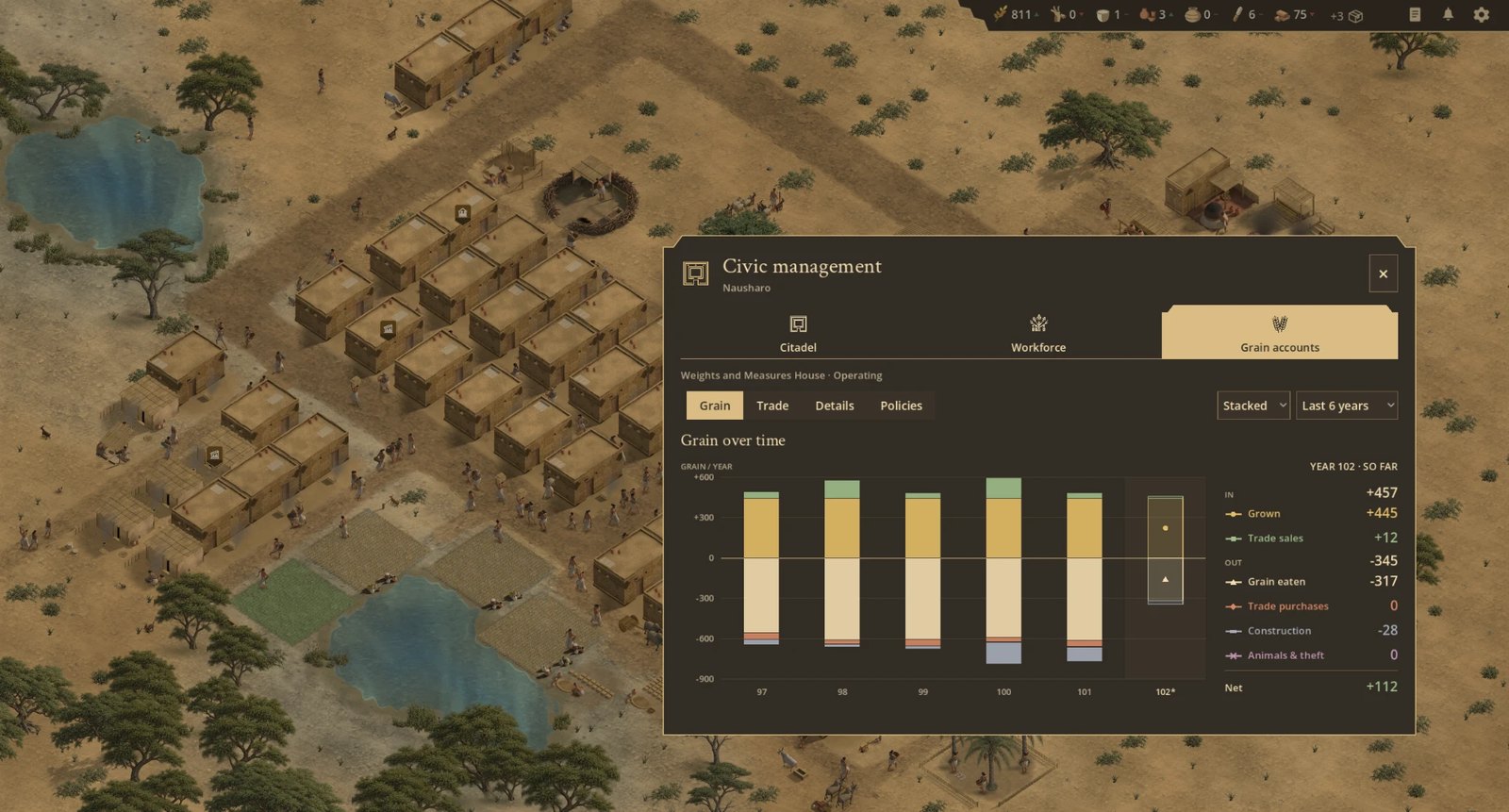
So far in my testing, the dual identity has not caused any issues or disruptions. For the most part, your settlements will rely on grain for their food (there are some maps that prioritize other food sources), but you also have other items available such as meat, pulses, and milk. Surplus grain is stored - often in houses (but still spendable).
There's a healthy tension in some missions - spend aggressively building and suddenly you run out of food before the next harvest.
I'm not sure if other games have used grain/food as the currency as well, but it's definitely added a fun element to the game. There are times I wish I had a giant stack of coins collected in the game - but that simply would not have been accurate and would counter my strong preference of listening to history.
Of course, you can keep a close eye on your grain through the Grain accounts screen that gets unlocked once you build the Weights and Measures House in your Citadel.